
Slabs, pads and aprons
Concrete Flatwork in Robbins Built on a Packed Base
At-grade slabs measured, formed and pitched before the truck shows up, so they sit flat and drain the way they should.
Flat Concrete Is Only Flat If the Ground Under It Is
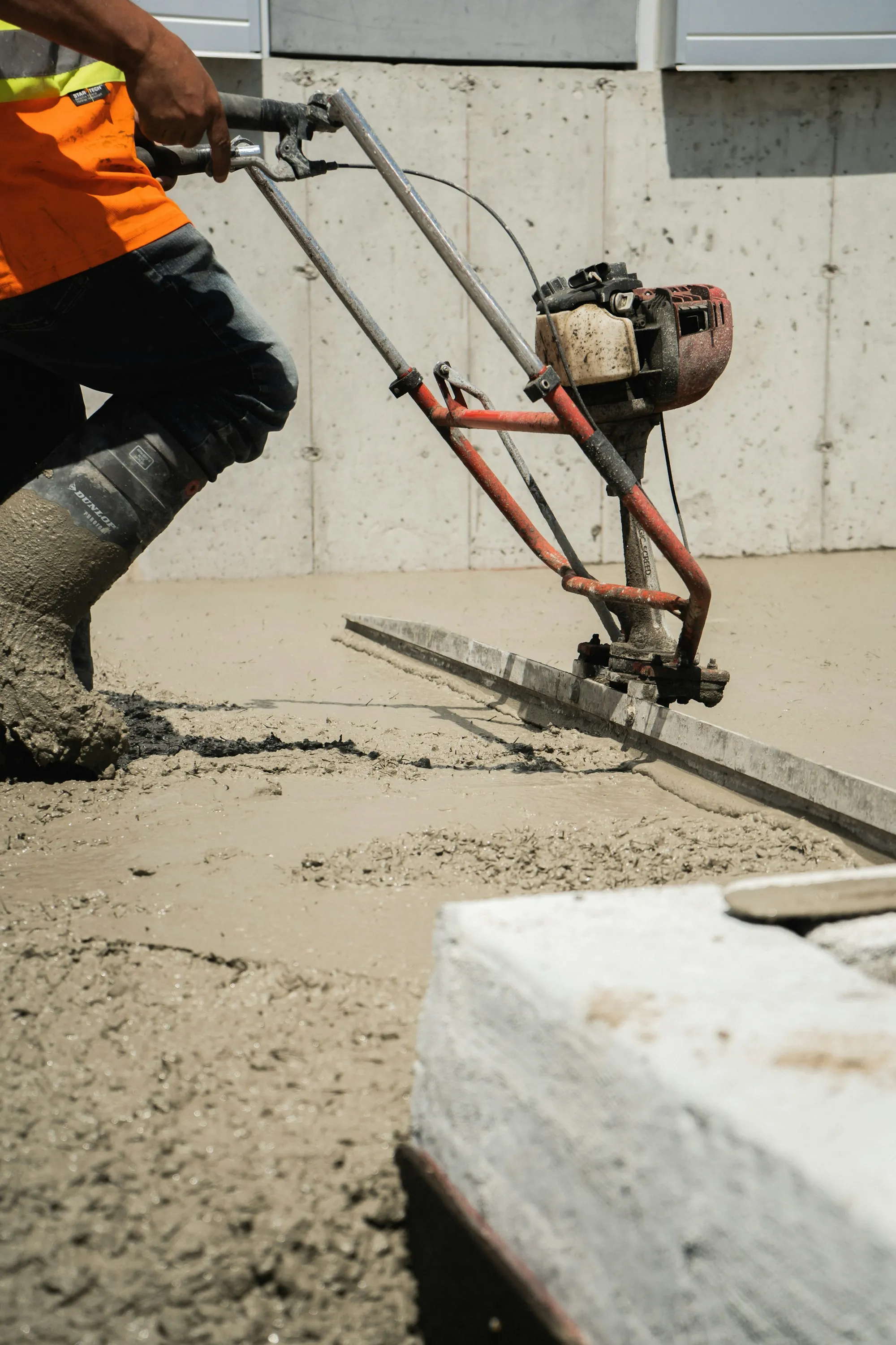
Flatwork is the everyday side of concrete: the pad behind the garage for trash cans, the slab under a shed, the apron where a driveway meets the street, the square of concrete that holds an air conditioner level. None of it is glamorous, and that is exactly why it gets rushed. A crew scrapes the grass, throws down a little stone and pours. Two winters later the pad is tipped toward the house and the shed door rubs. We do it the slow way. The foreman measures the area, marks the finished height and figures the fall so rain runs off the edge rather than standing on top. Soft soil and old fill are dug out. Crushed stone goes back in lifts and each lift is compacted, which matters a lot on the heavy clay found around Robbins. Forms are staked straight and checked for square, reinforcement is set where the slab will carry weight, and only then do we order concrete. After the pour the surface is finished to suit the use, control joints are cut on a planned layout and the slab is kept damp and covered while it cures. If old concrete is in the way, breaking it out and hauling it off is written into the price, so the only thing left in your yard is the new slab.
What a Flatwork Job Covers
A pad for a condenser or a slab for a shed, the checklist barely changes.
Layout and grades
The slab is marked out on the ground and the finished height set so water has somewhere to go.
Tear-out and hauling
Cracked or sunken concrete broken out, loaded and taken away when the job is a replacement.
Excavation to firm soil
Topsoil and soft fill removed until the dig reaches ground that will not settle.
Compacted stone base
Crushed stone placed in layers and packed with a plate compactor, one layer at a time.
Reinforcement where it counts
Rebar or mesh placed on chairs in slabs that will carry weight, not left lying in the dirt.
Finish to suit the use
Broomed for footing outside, or troweled smooth where a shed or machine will sit.
Planned control joints
Joints spaced for the slab's size and thickness so shrinkage cracks follow straight lines.
Cure, strip and tidy
Wet curing or blankets as the weather demands, then forms out and soil pushed back to the edges.
How a Slab Goes From Grass to Concrete
Measure and price
We look at the spot, the soil and where water runs today, then put thickness, base, reinforcement, finish and any removal into a written price.
Dig, base and form
Any old slab is broken out, the dig continues until the soil is solid and stone is packed down. Forms go in at the marked grades and get squared.
Pour, finish and cure
The crew places and finishes the concrete, saws the joints and keeps the slab damp under cover. Then the forms come out and the surroundings get tidied.
Why Robbins Owners Use Us for Flatwork
Small jobs done properly
A pad for an air conditioner gets the same base and layout care as a big slab.
Water planned before the pour
Every slab gets a measured fall, so puddles and runoff toward the house are designed out.
Nothing left behind
Broken concrete, forms and spoils leave on our truck, not in a pile by the alley.
- Dug to firm soil
- Stone packed in lifts
- Fall set for drainage
- Joints laid out first
Got a Spot That Needs a Slab?
Give us the rough size and what will sit on it. We will talk through thickness and base on the phone and set a time to measure.